

Understand your muscles.
The scientific evidence behind what we measure, explained clearly for professionals, patients and athletes.
Note: infographics are in Spanish.
Scientific publications
Validation studies of our devices
Peer-reviewed articles evaluating PowerTrack, the optical sensor with a magnetic mount also built into Wellness Bench.
Metrology · 2025
Evaluating a New Optical Device for Velocity-Based Training: Validity and Reliability of the PowerTrack™ Sensor
Validity and reliability of PowerTrack for measuring movement velocity in velocity-based training (VBT).
Martin-Rivera F, Rodrigo-Mallorca D, Franco-Grau LM, Vidal-Vidal J, Saez-Berlanga A, Chulvi-Medrano I. Metrology. 2025;5(3):49. doi:10.3390/metrology5030049
Read the article ↗
Sensors · 2026
From Physiology to Practice: Validation of Eccentric Velocity Monitoring Using an Optoelectronic System
PowerTrack against a laboratory reference system (MuscleLab) in the eccentric phase of the Smith machine squat: concordance CCC 0.95 and between-session reliability ICC 0.87–0.96.
Martin-Rivera F, Rodrigo-Mallorca D, Vidal-Vidal J, Franco-Grau LM, Saez-Berlanga A, Chulvi-Medrano I. Sensors. 2026;26(6):1797. doi:10.3390/s26061797
Read the article ↗
Health5 min read
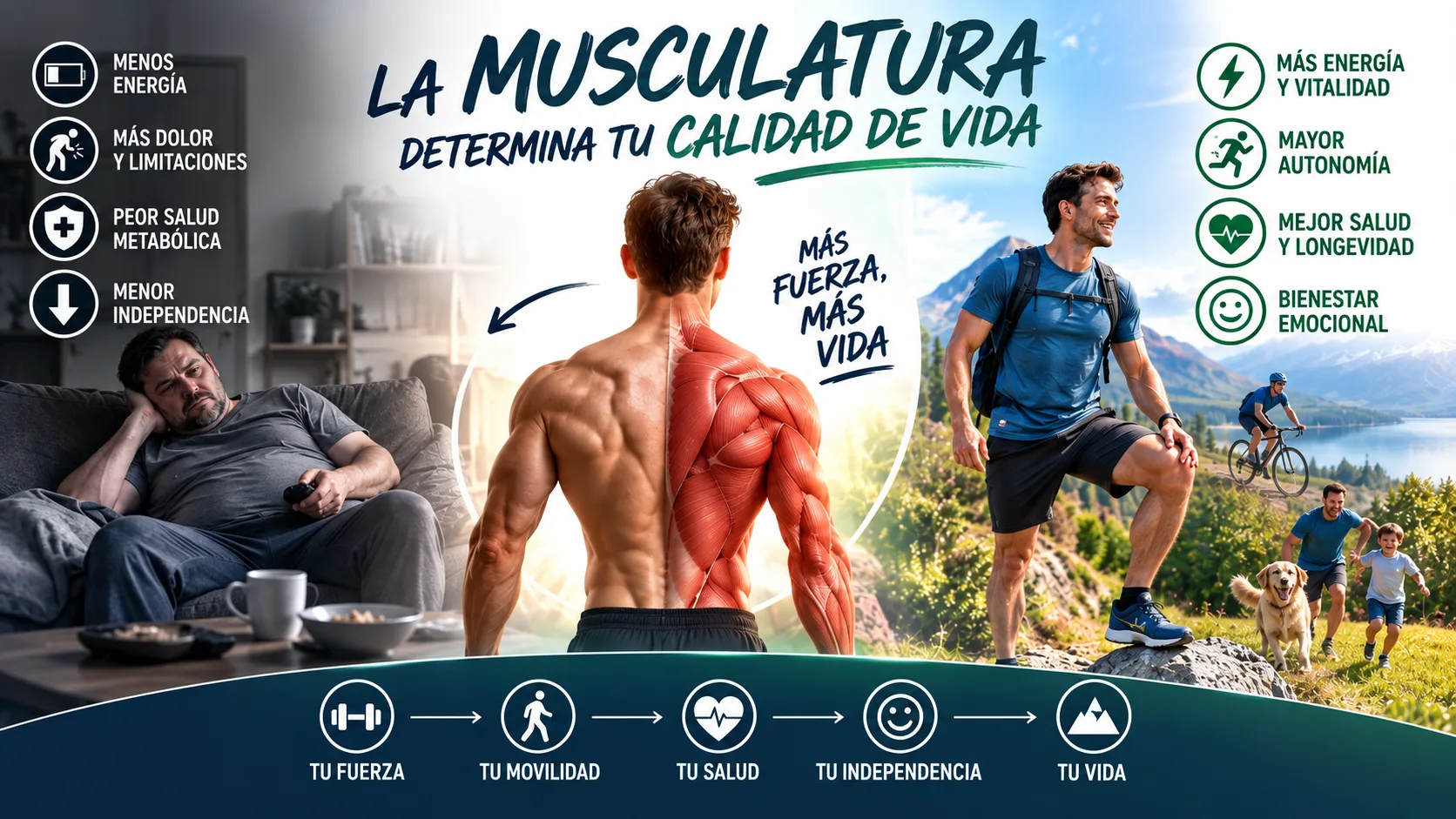
Muscle: the organ that shapes your quality of life
Muscle is not just for movement. It regulates metabolism, protects against disease and is one of the best predictors of a long, independent life.
Read article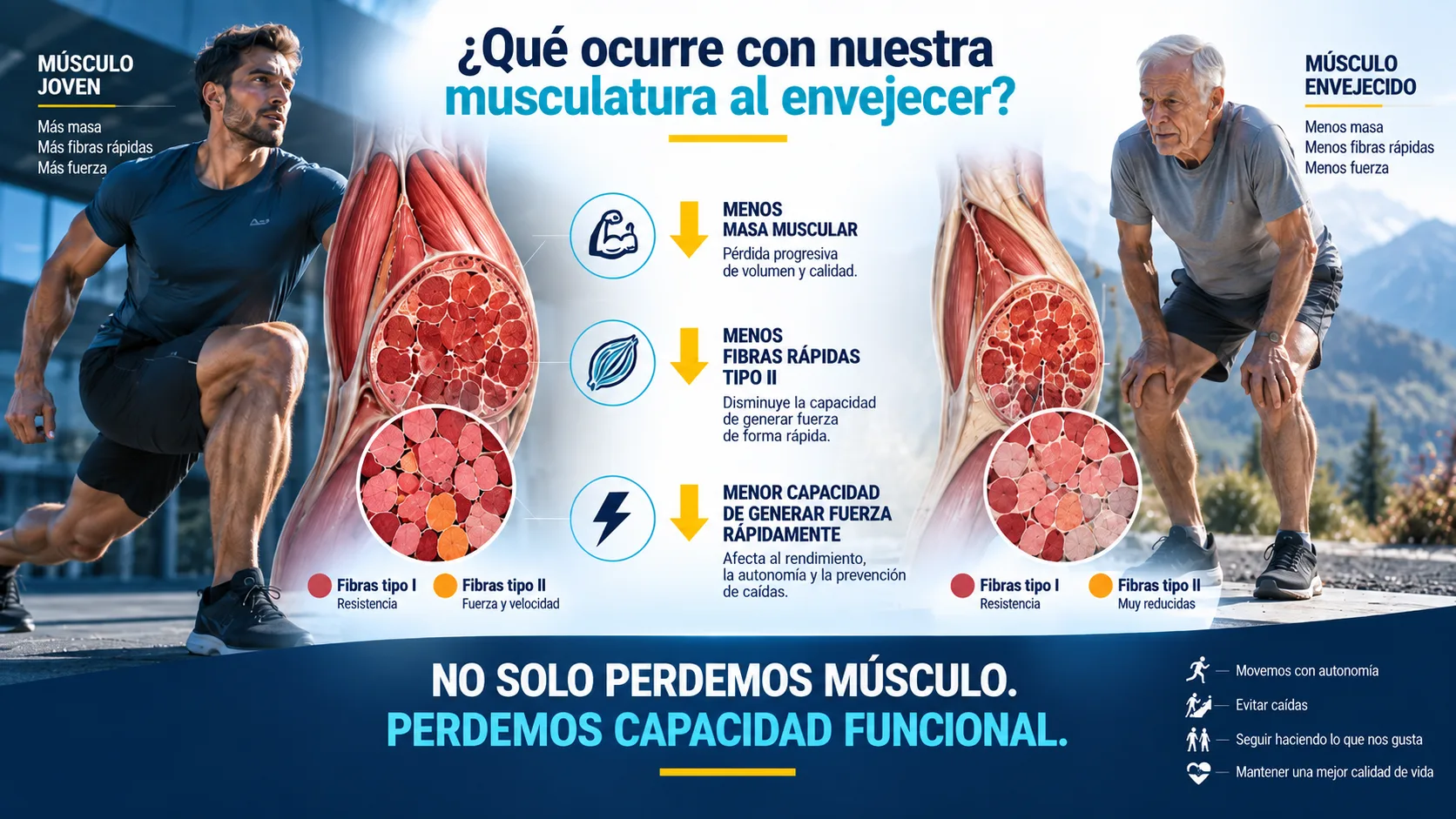
Longevity6 min read
Ageing and sarcopenia: it’s not just muscle we lose
With age we lose muscle mass, but above all we lose the ability to produce force quickly. Detecting it early changes the outlook.
Read article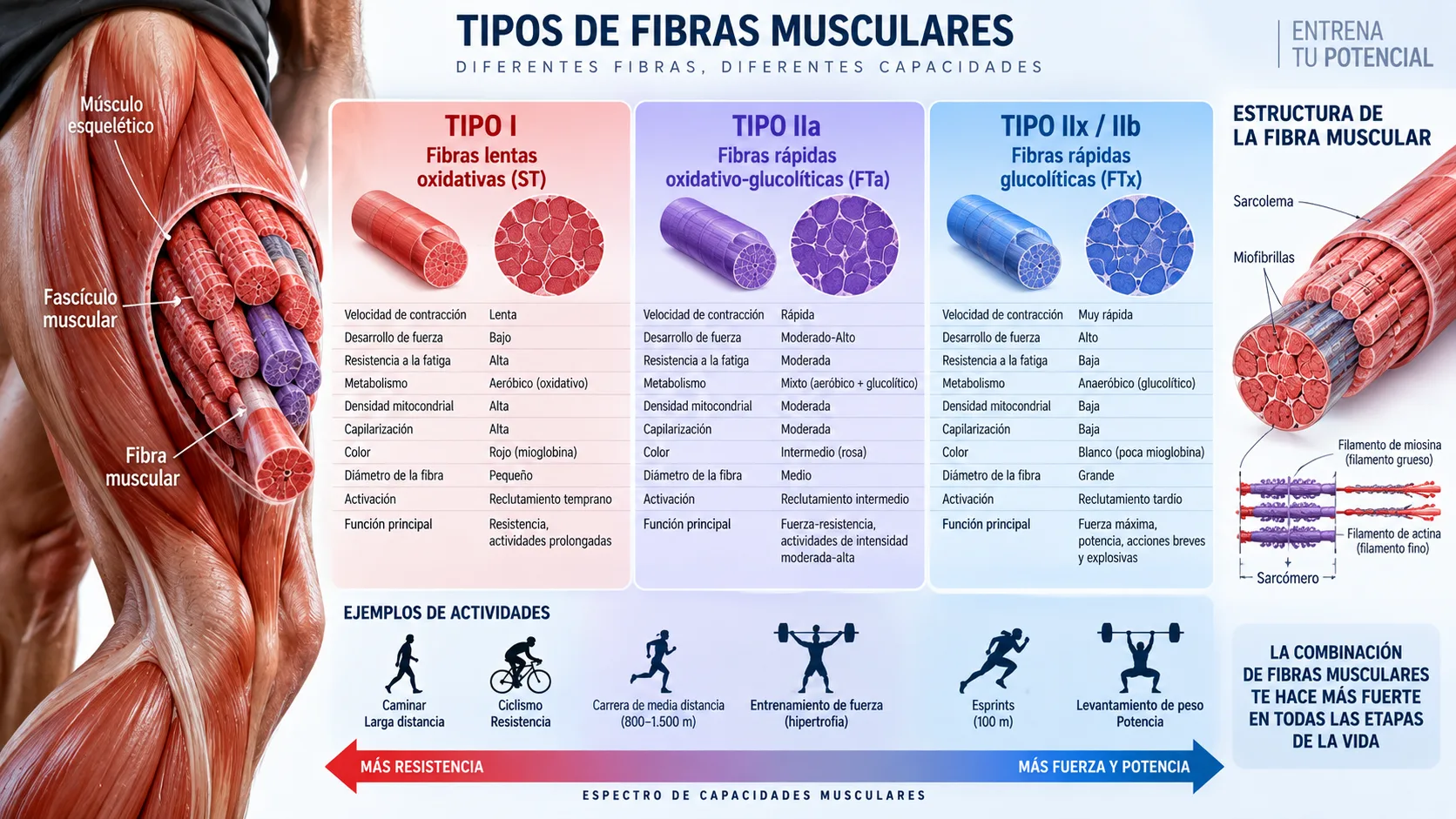
Physiology4 min read
Not all muscle fibres are the same
Slow, fast and very fast fibres: each type has a role. Understanding them explains why speed and power matter so much as we age.
Read article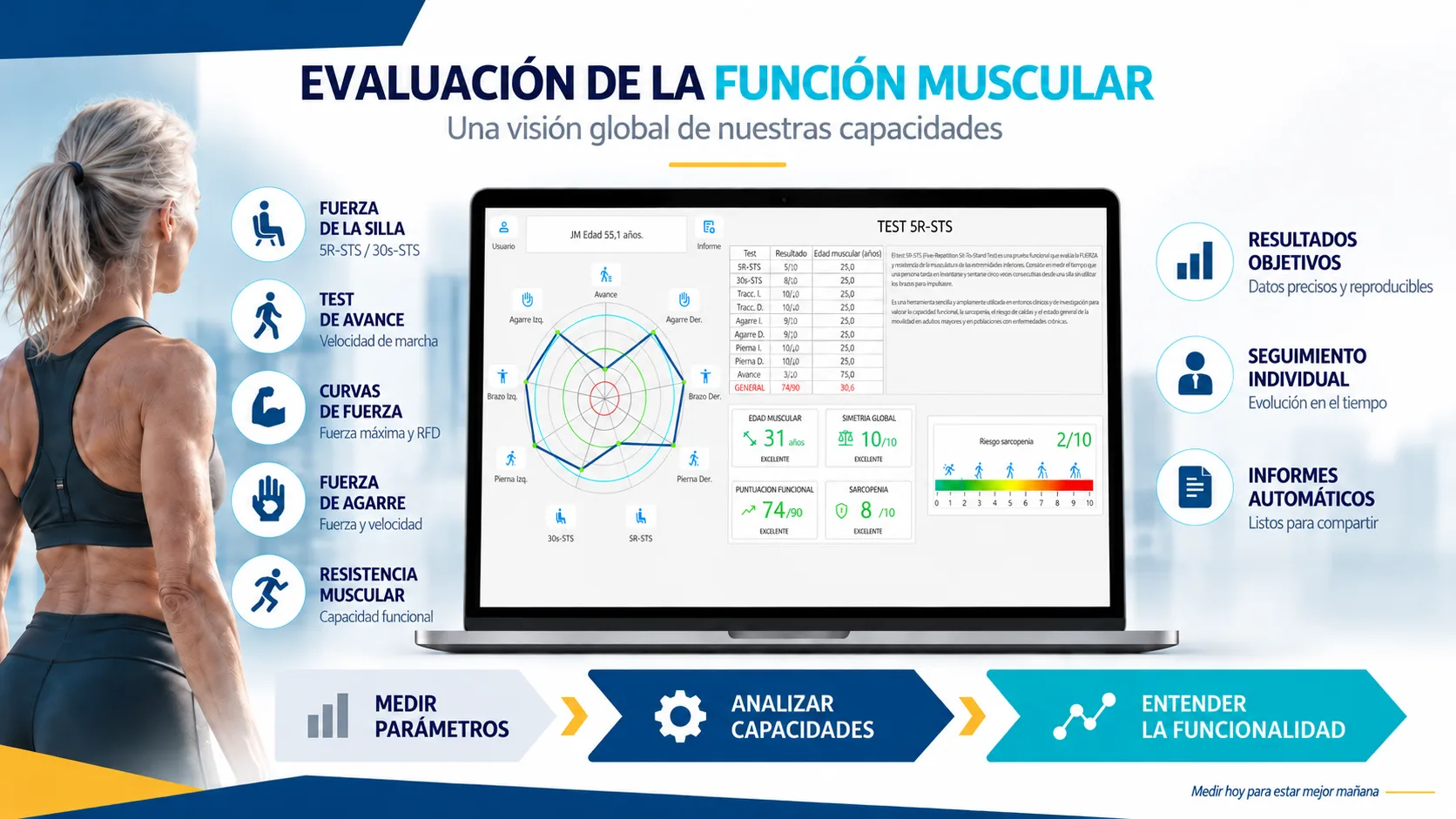
Assessment7 min read
The functional tests that measure your real capacity
Grip strength, the 5R-STS and 30s-STS chair tests and the step test: what they measure, how they are done and why they are the most validated.
Read article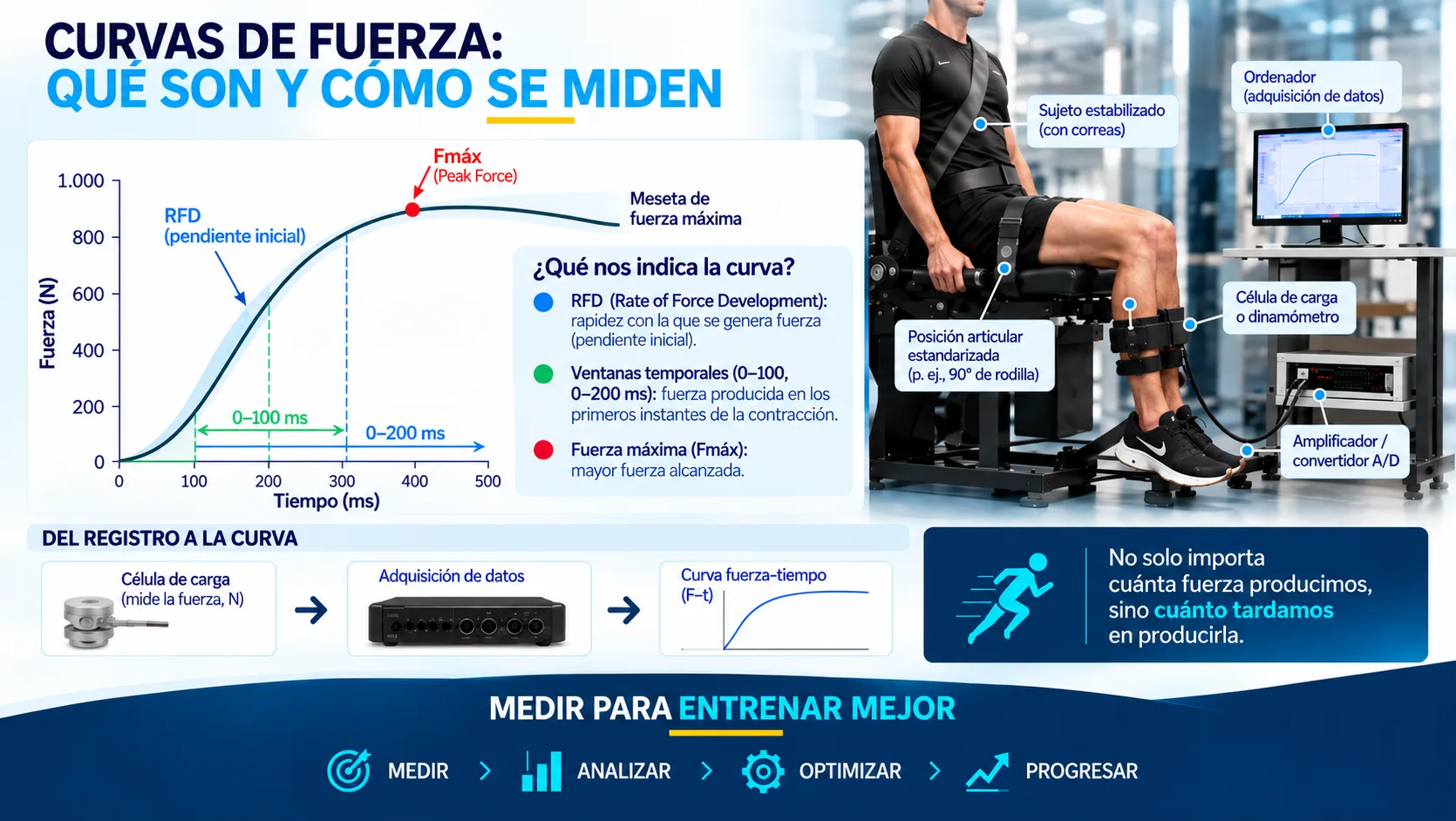
Performance6 min read
Force curves, RFD and VBT: measure to train better
It’s not only how much force we produce, but how fast we produce it. Here’s how force curves are measured and how velocity helps dose training.
Read articleAssessment5 min read
Grip strength: normal values by age and sex
Table of normal grip strength values by age and sex, how to measure it properly and what a low result means.
Read articleAssessment4 min read
How sarcopenia is measured: tests and cut-off points
The tests of the European EWGSOP2 consensus and their cut-off points: grip, chair stand test, muscle mass and physical performance.
Read articleAssessment4 min read
Chair stand test: how to do it and how to interpret it
How to perform the 5-repetition and 30-second tests, and reference values by age and sex.
Read articlePerformance3 min read
VBT on plate-loaded machines: how to measure velocity without a barbell
What to measure, how to use velocity loss and which sensors work for applying VBT on machines.
Read articleAssessment3 min read
Gait speed: reference values and what it indicates
How to measure it over 4 metres and what 0.8 and 1.0 m/s mean in older adults.
Read articleLongevity3 min read
What muscle age is and how it is calculated
How it is calculated by comparing your strength tests with reference values, and why it helps you improve.
Read articlePerformance3 min read
Load-velocity profile: a step-by-step guide
How to estimate your 1RM without a maximal test and adjust the load of every session, with a barbell or on a machine.
Read articleAssessment3 min read
Hand dynamometer: how to choose one for your practice
Hydraulic, analogue or digital: what to look for to measure grip strength properly.
Read articleLongevity3 min read
RFD: why fast strength matters as we age
Rate of force development is lost before maximal strength. How to measure and train it.
Read articleAssessment3 min read
Measuring strength in physiotherapy: asymmetries and return to sport
The limb symmetry index, the 90% threshold and why to measure rather than estimate.
Read articlePerformance3 min read
Resistance band training: how to measure the load
They deliver the same strength gains as weights, but their load is hard to know. Here is how to measure it.
Read articlePerformance3 min read
Machine usage data: what a gym learns by measuring
Which machines are used, at what times and how members train, to guide purchasing and service decisions.
Read articleAssessment4 min read
Hydraulic or digital dynamometer
Hydraulic (Jamar-type) vs digital hand dynamometers compared: accuracy, the data they provide, maintenance and who each one suits in clinical practice, physiotherapy or research.
Read articlePerformance4 min read
VBT sensors compared
Which sensor types exist for velocity-based training (VBT), how they measure, their reliability and which suits barbells, dumbbells or plate-loaded machines.
Read articleFree tools
Calculate your results
Sarcopenia test
Free sarcopenia test: SARC-F questionnaire, grip strength, chair stand test, muscle mass and gait speed, with the cut-off points of the European EWGSOP2 consensus.
Take the testMuscle age calculator
Free calculator: estimate your muscle age from grip strength, sex and age, using the reference values of Dodds et al. (2014) and the EWGSOP2 sarcopenia cut-off.
Open calculator1RM velocity calculator
Estimate your one-repetition maximum (1RM) without a maximal test from 2 to 6 loads and their mean velocity, using a linear load-velocity profile.
Open calculatorLimb symmetry calculator (LSI)
Calculate the limb symmetry index (LSI) and side-to-side strength asymmetry, with the 90% return-to-sport reference.
Open calculatorShall we show it at your facility?
We will show you the device in action, with no commitment, on-site or by video call.