

Assessment7 min readBy Juan Manuel Rovira de Miguel
The functional tests that measure your real capacity
Grip strength, the 5R-STS and 30s-STS chair tests and the step test: what they measure, how they are done and why they are the most validated.
A global view of our capabilities
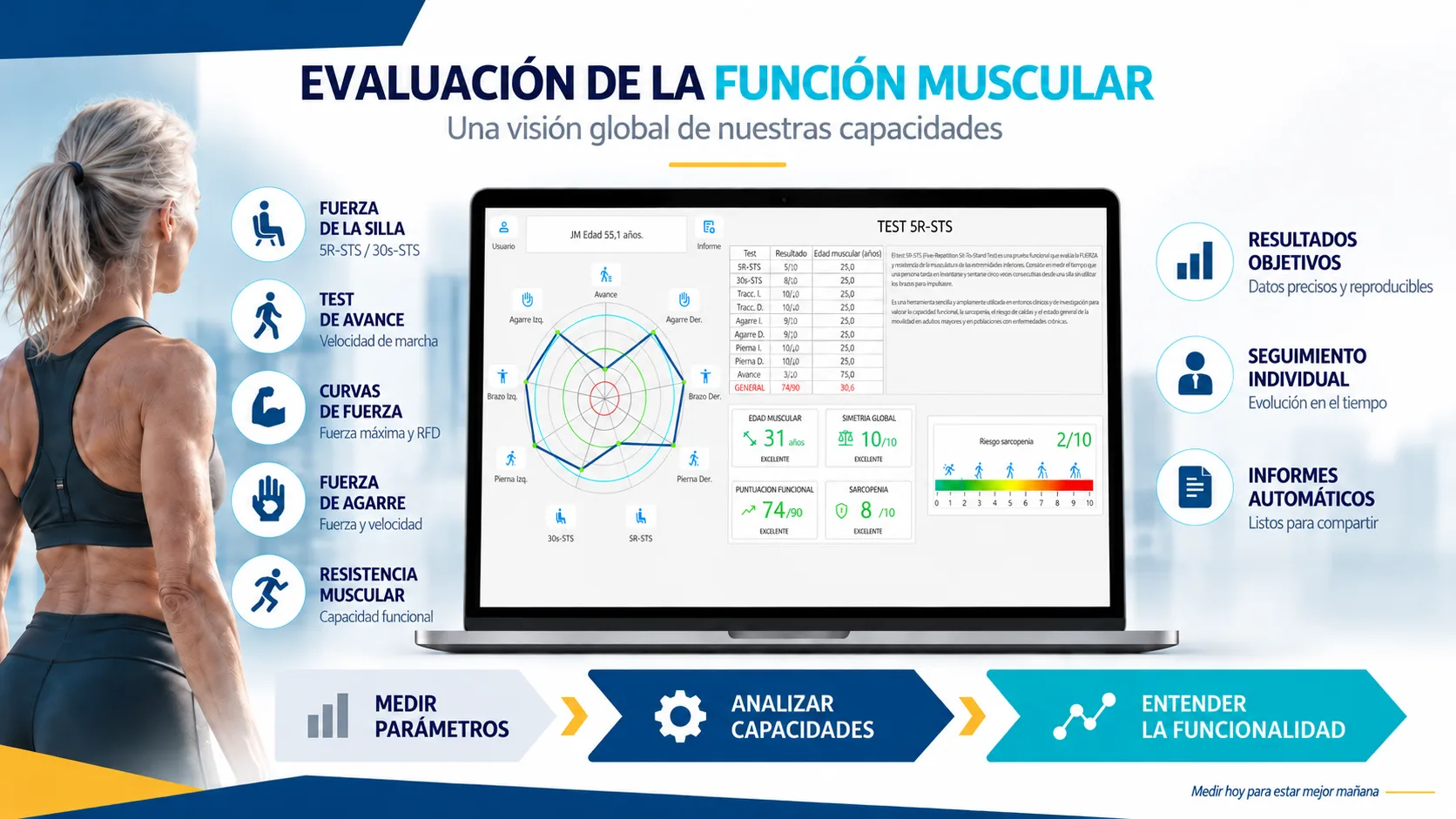
No single test fully describes muscle function. Combining upper-limb strength, leg strength and endurance, and mobility gives a reliable picture of functional status and how it changes.
 Enlarge
Grip strength
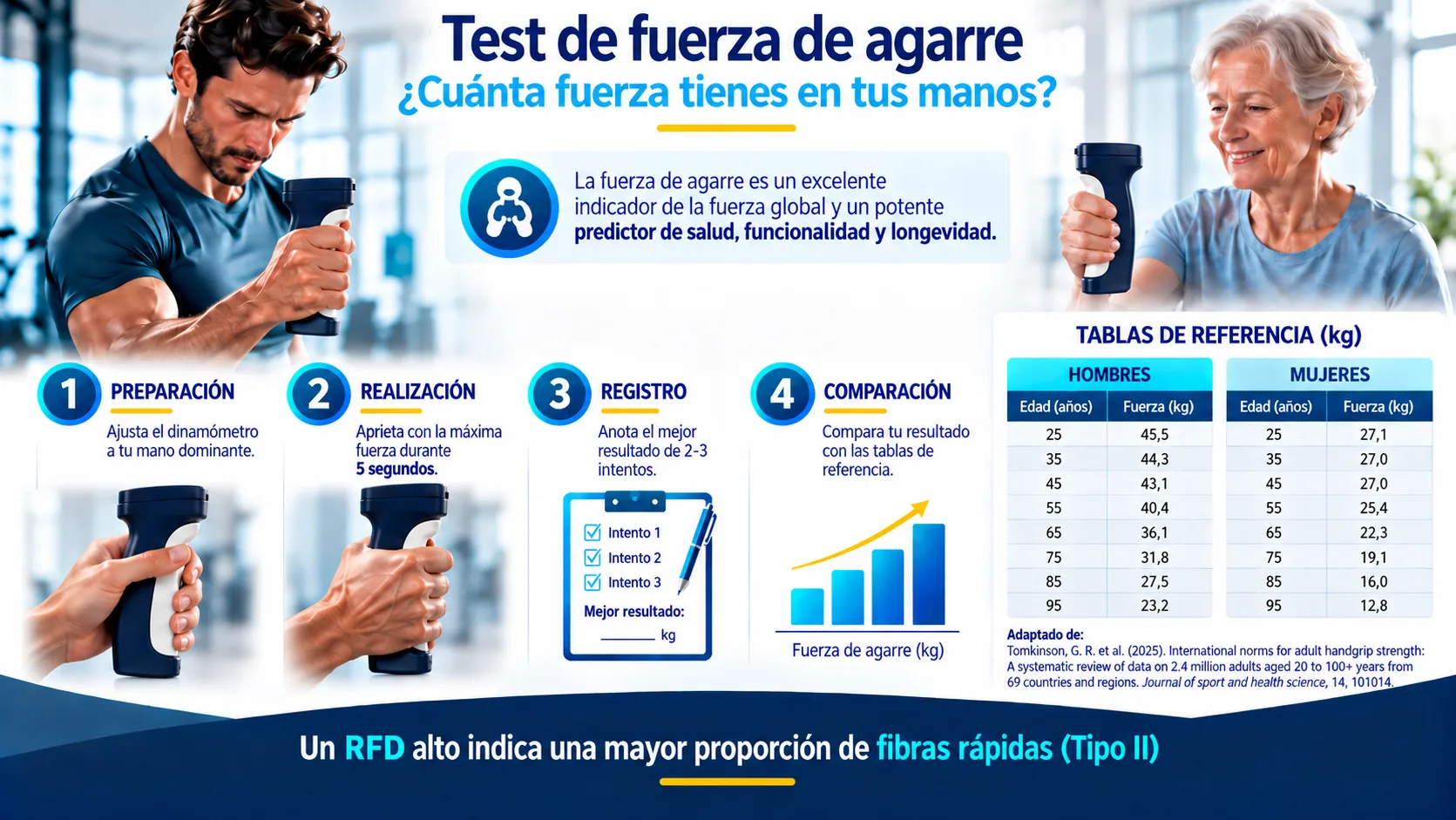
Grip strength is an excellent indicator of overall strength and a powerful predictor of health, function and longevity. It is measured with the elbow bent at 90°, performing several attempts with each hand and recording the best result, which is compared with age- and sex-specific reference tables.
A digital dynamometer also captures the full force curve: peak force and RFD, which reflects the proportion of fast fibres.
 Enlarge
Chair tests: 5R-STS and 30s-STS
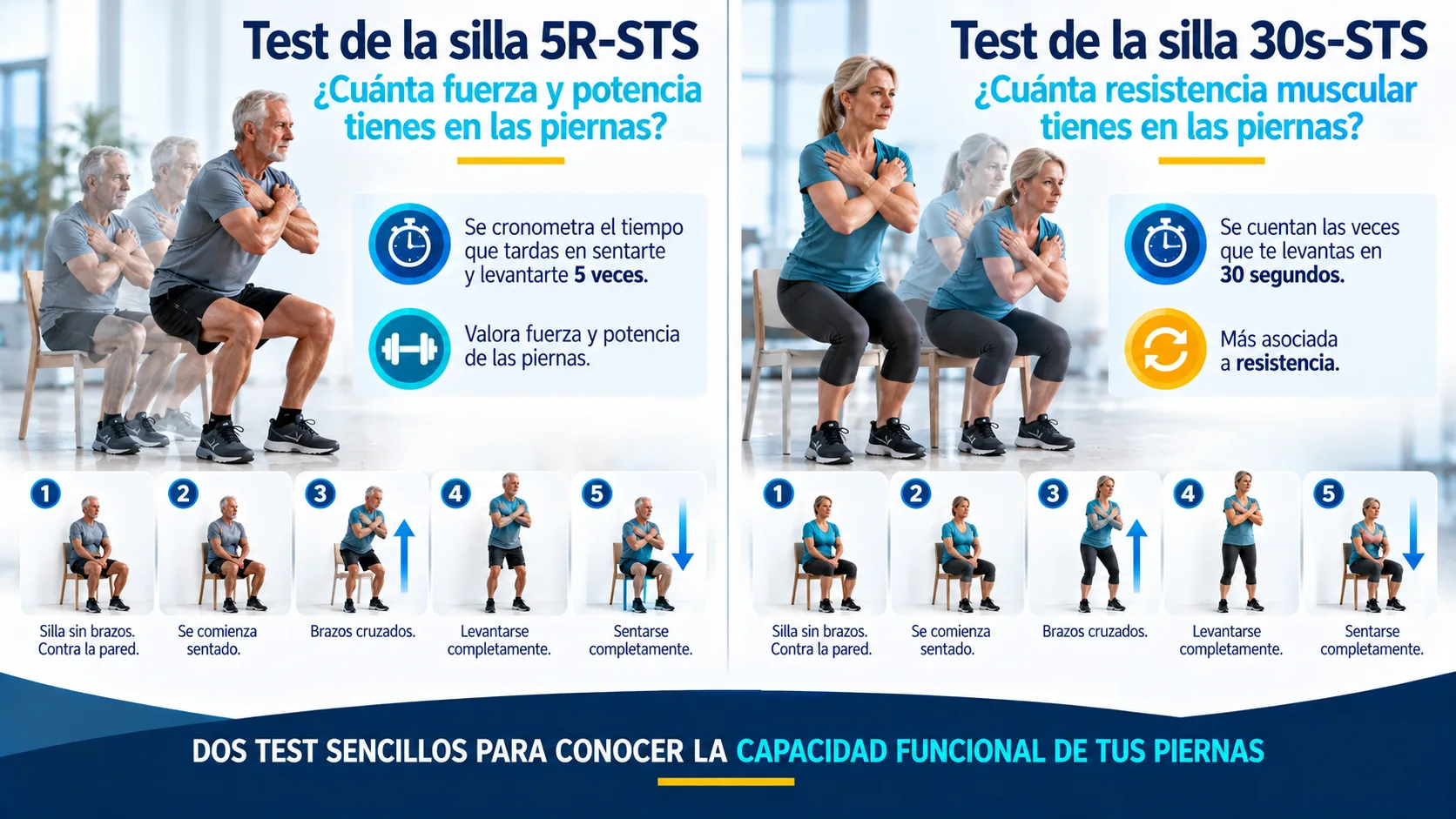
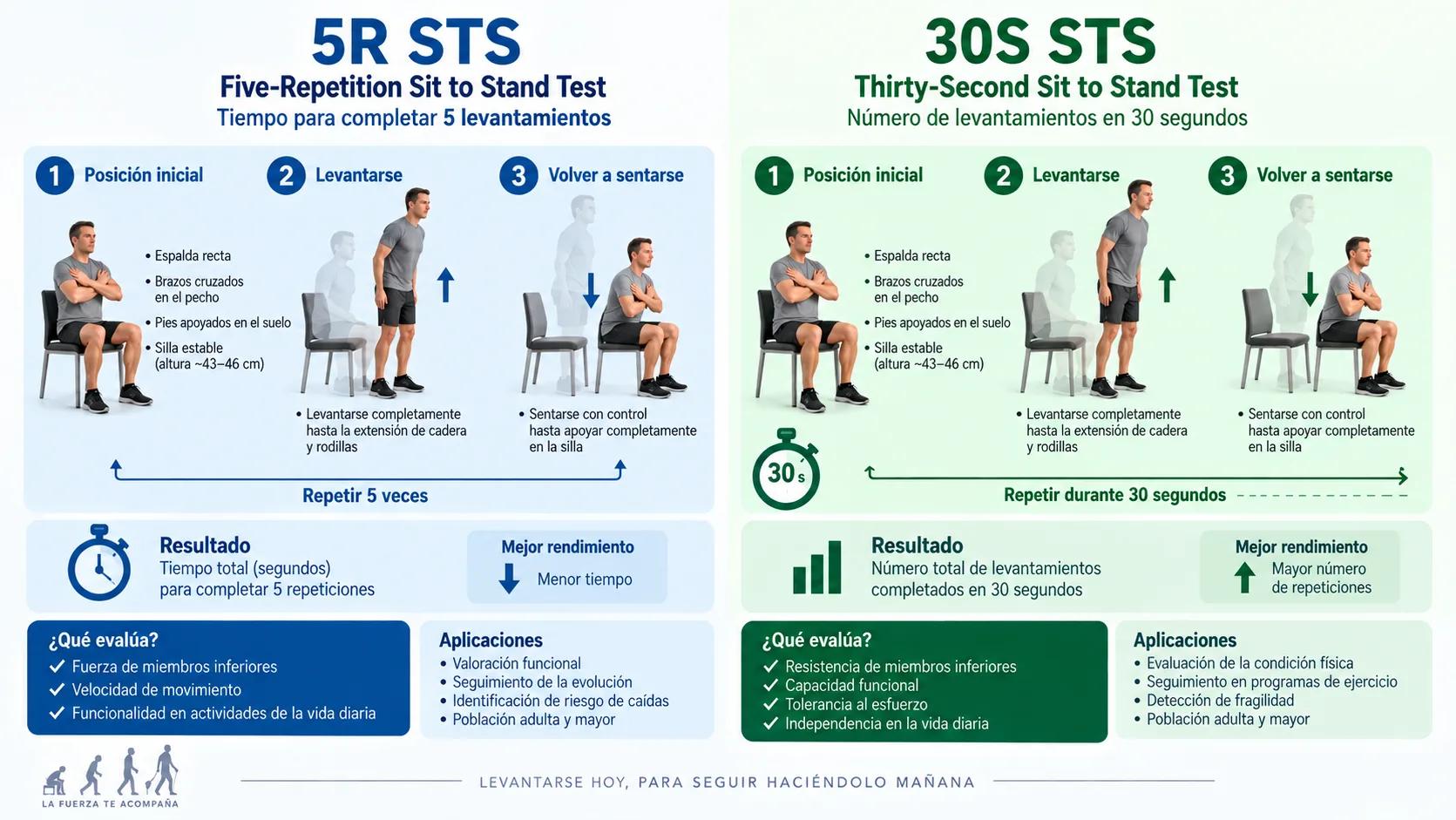
The 5R-STS (Five-Repetition Sit-to-Stand) measures how long it takes to stand up and sit down five times without using the arms, assessing leg strength and power. The 30s-STS counts how many times we stand up in 30 seconds, assessing muscular endurance.
They are simple, safe and widely used in clinical and research settings to assess functional capacity, sarcopenia and fall risk.
 Enlarge
Step test
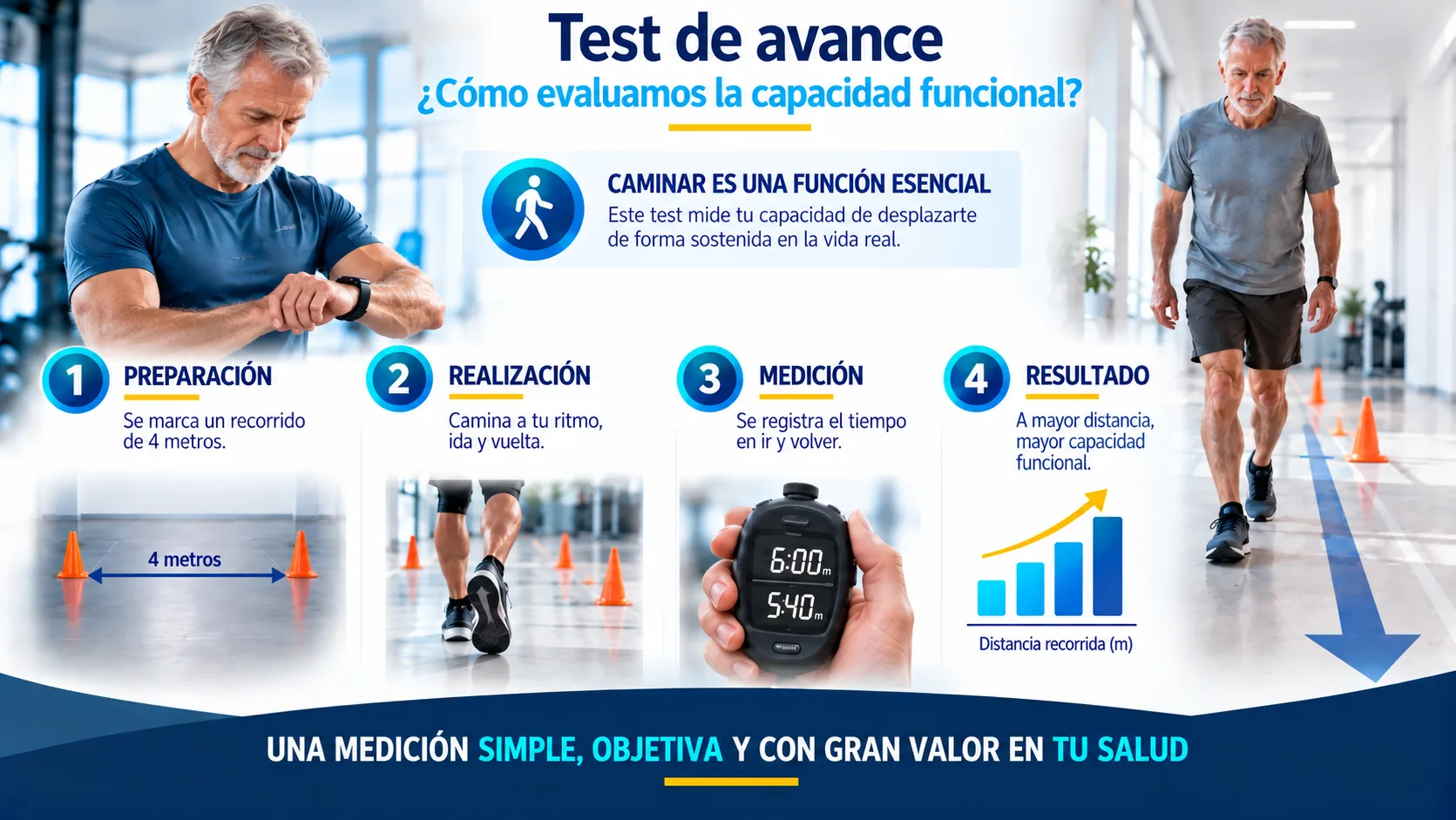
Walking is an essential function. The step test measures the ability to move steadily: a course is marked, time or distance is recorded and compared with reference values. A simple, objective measurement of great value for health.
 Enlarge
Every test in a single device
Wellness Bench integrates and sensorises all these tests in a single platform, with results automatically compared with normative values and a final muscle-age report in under five minutes.
 Enlarge
Free tool
Take the online sarcopenia test: SARC-F questionnaire, strength, muscle mass and gait speed with the European EWGSOP2 criteria.
Frequently asked questions
How is grip strength measured?
With a dynamometer, the elbow at 90° and several attempts with each hand. The result is compared with reference tables by age and sex. A digital dynamometer also records the full force curve, including peak force and RFD.
What is the 5-repetition sit-to-stand test (5R-STS)?
It measures the time taken to stand up and sit down five times from a chair without using the arms. It assesses leg strength and power.
How is the 30-second sit-to-stand test (30s-STS) different?
It counts how many times the person stands up from the chair in 30 seconds. It assesses leg muscle endurance.
Is a single test enough to assess muscle function?
No. Combining arm strength, leg strength and endurance, and mobility gives a much more reliable picture of functional status.
References
- Cruz-Jentoft AJ et al. Sarcopenia: revised European consensus on definition and diagnosis. Age Ageing. 2019;48:16-31.
- Jones CJ, Rikli RE, Beam WC. A 30-s chair-stand test as a measure of lower body strength in community-residing older adults. Res Q Exerc Sport. 1999;70:113-9.
- Bohannon RW. Reference values for the five-repetition sit-to-stand test: a descriptive meta-analysis of data from elders. Percept Mot Skills. 2006;103:215-22.
- Studenski S et al. Gait speed and survival in older adults. JAMA. 2011;305:50-8.
- Tomkinson GR et al. International norms for adult handgrip strength: a systematic review of data on 2.4 million adults aged 20 to 100+ years from 69 countries and regions. J Sport Health Sci. 2025;14:101014.
- Roberts HC et al. A review of the measurement of grip strength in clinical and epidemiological studies: towards a standardised approach. Age Ageing. 2011;40:423-9.
For general information only. It does not replace assessment by a healthcare professional.