

Performance6 min readBy Juan Manuel Rovira de Miguel
Force curves, RFD and VBT: measure to train better
It’s not only how much force we produce, but how fast we produce it. Here’s how force curves are measured and how velocity helps dose training.
What is a force curve?
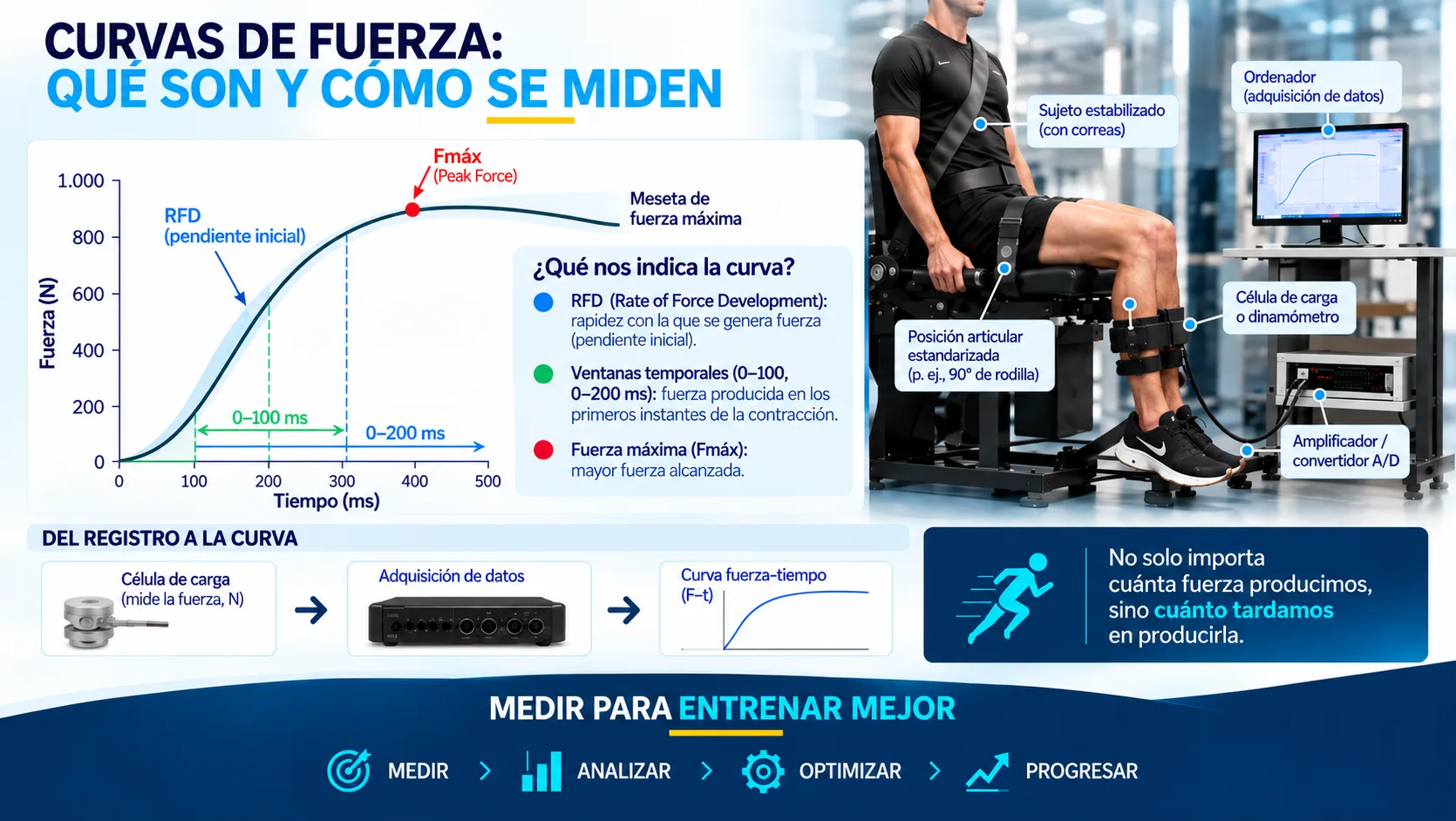
A load cell records force hundreds of times per second while the person pushes or pulls. The result is a curve showing how force rises over time until it reaches its peak (Fmax).
The initial slope of that curve is the RFD (Rate of Force Development): how fast force is developed. It is usually analysed in 0–100 ms and 0–200 ms windows and is key for rapid actions such as regaining balance.
 Enlarge
Velocity-based training (VBT)
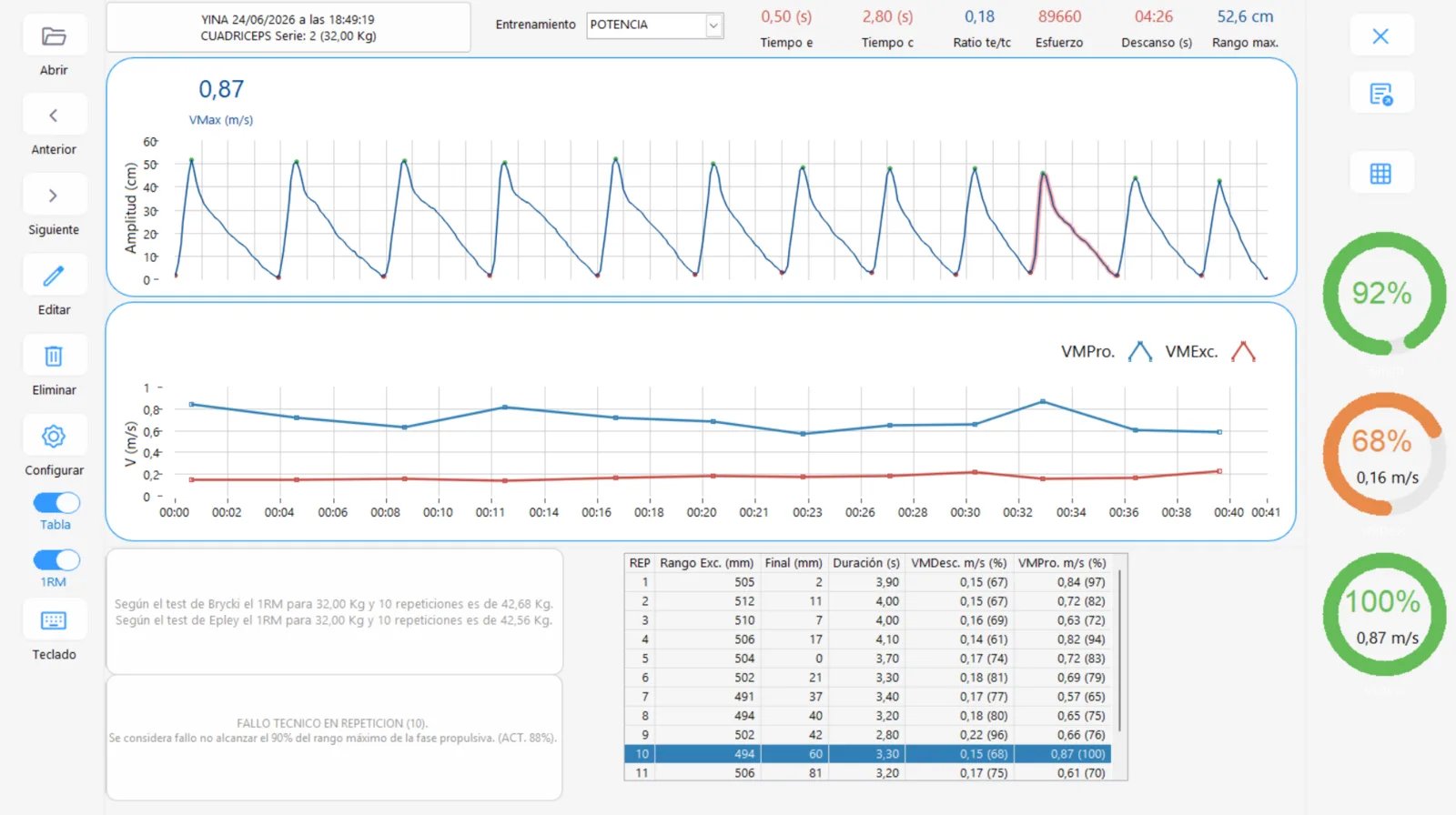
The speed at which a load moves is closely related to the relative effort it represents. By measuring the velocity of each rep, the day’s load can be matched to the person’s real state.
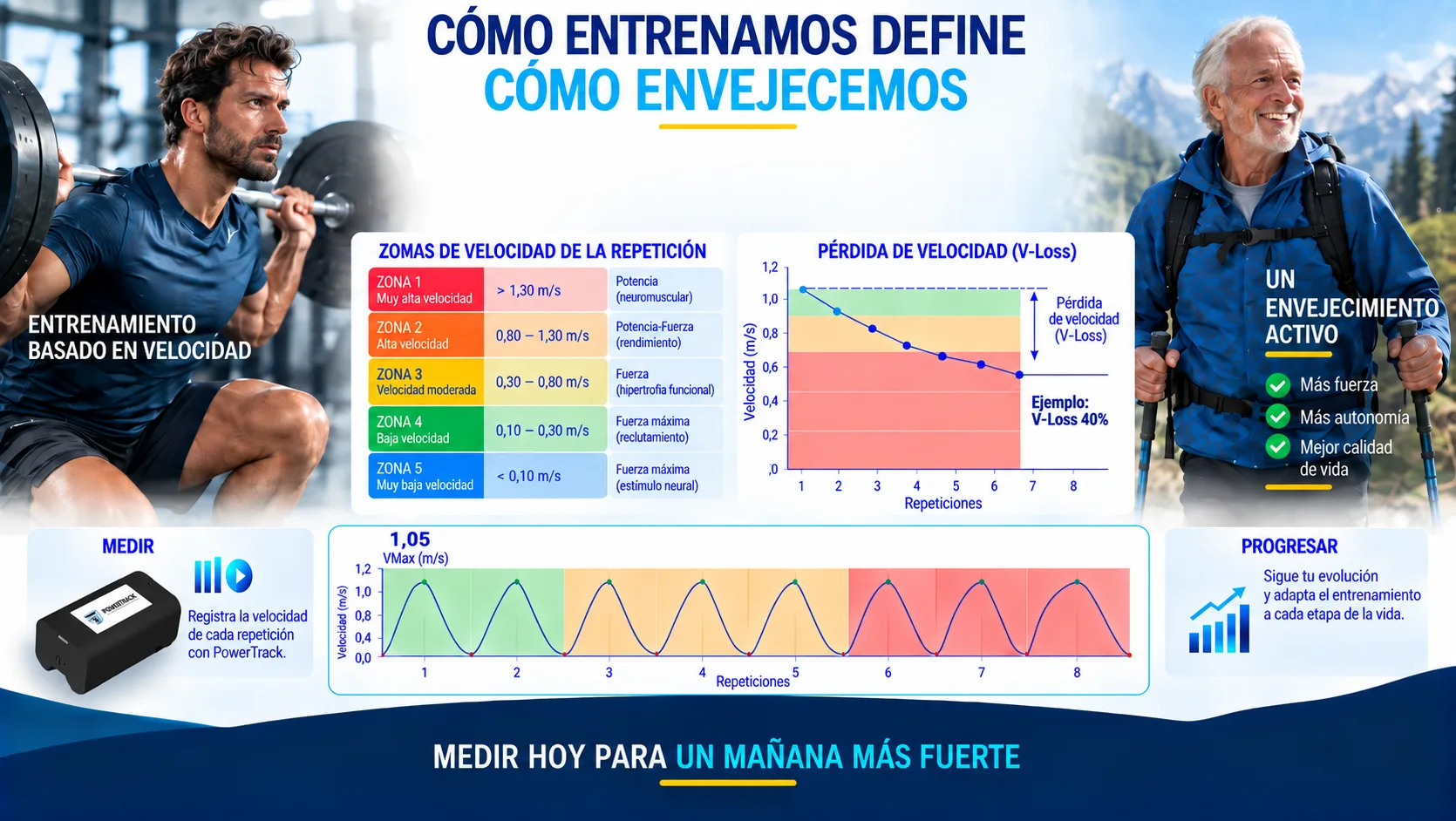
Velocity loss within a set is also a reliable indicator of fatigue: stopping the set when velocity drops by a given percentage keeps training quality high and reduces injury risk.
 Enlarge
How we train defines how we age
Velocity zones allow training to be targeted towards maximal strength, strength-speed or power. In older adults, training with the intention to move fast is especially valuable to preserve fast fibres and functional capacity.
 Enlarge
Change starts with you
Measuring turns good intentions into visible progress. Seeing the data from each session motivates, helps maintain consistency and shows that effort pays off.
 Enlarge
Frequently asked questions
What is RFD (rate of force development)?
The initial slope of the force curve: how quickly force is developed. It is analysed in 0–100 ms and 0–200 ms windows and is key in fast actions such as regaining balance.
What is velocity-based training (VBT)?
A method that measures the velocity of every repetition. Because velocity is related to the percentage of effort, it lets you adjust the load to the person’s actual state each day.
Why measure velocity loss within a set?
Velocity loss is a reliable indicator of fatigue. Stopping the set at a given percentage helps keep training quality high and reduces injury risk.
References
- Maffiuletti NA et al. Rate of force development: physiological and methodological considerations. Eur J Appl Physiol. 2016;116:1091-116.
- González-Badillo JJ, Sánchez-Medina L. Movement velocity as a measure of loading intensity in resistance training. Int J Sports Med. 2010;31:347-52.
- Sánchez-Medina L, González-Badillo JJ. Velocity loss as an indicator of neuromuscular fatigue during resistance training. Med Sci Sports Exerc. 2011;43:1725-34.
For general information only. It does not replace assessment by a healthcare professional.