

Longevity6 min readBy Juan Manuel Rovira de Miguel
Ageing and sarcopenia: it’s not just muscle we lose
With age we lose muscle mass, but above all we lose the ability to produce force quickly. Detecting it early changes the outlook.
What happens to muscle as we age?
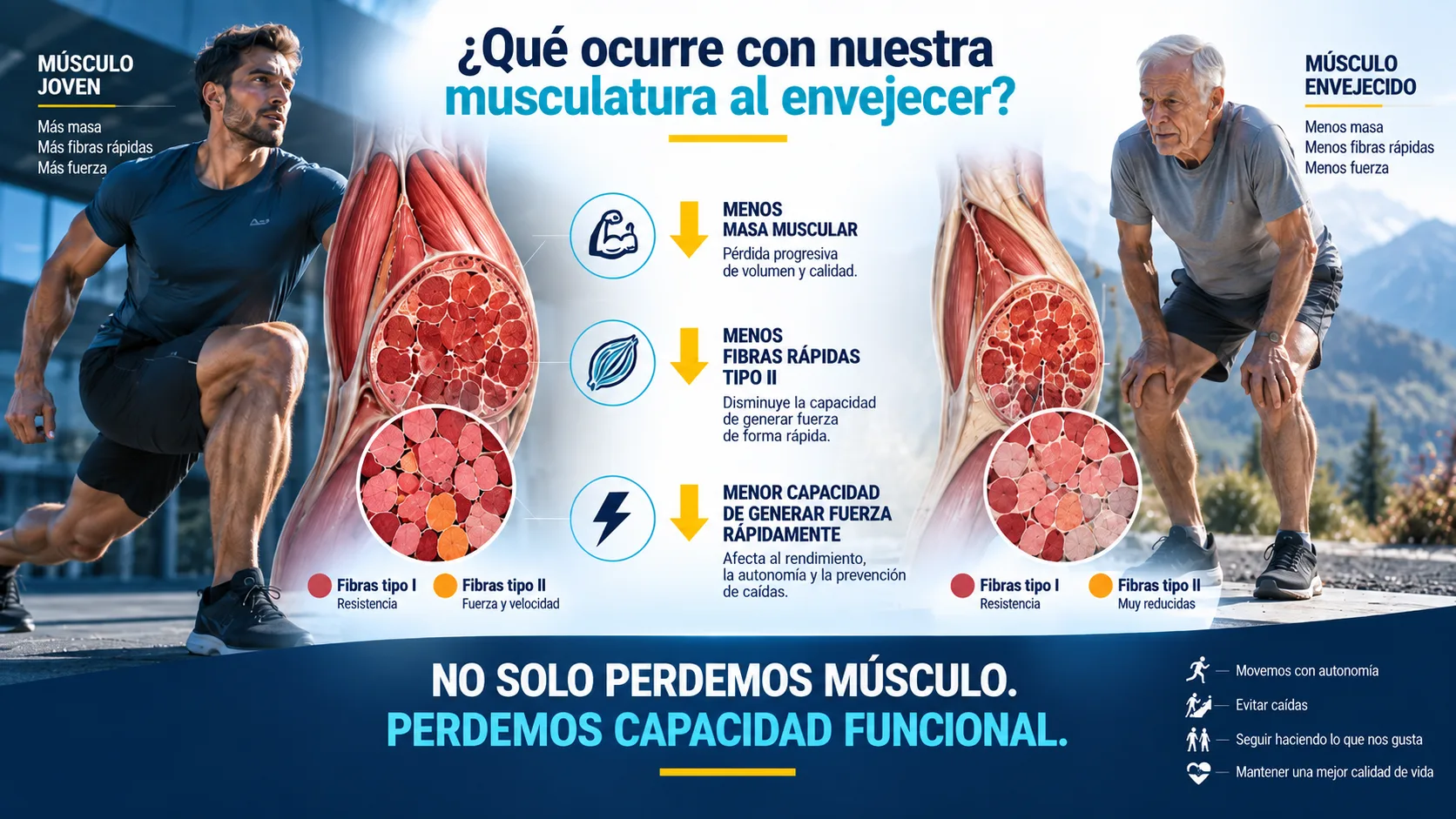
From our forties onwards muscle mass declines progressively, and strength declines even faster than mass. Fast fibres (type II), responsible for explosive movements, are the most affected.
The result is not just cosmetic: we lose the ability to react to a trip, stand up briskly or climb a high step. We don’t just lose muscle — we lose functional capacity.
 Enlarge
Sarcopenia: strength comes first
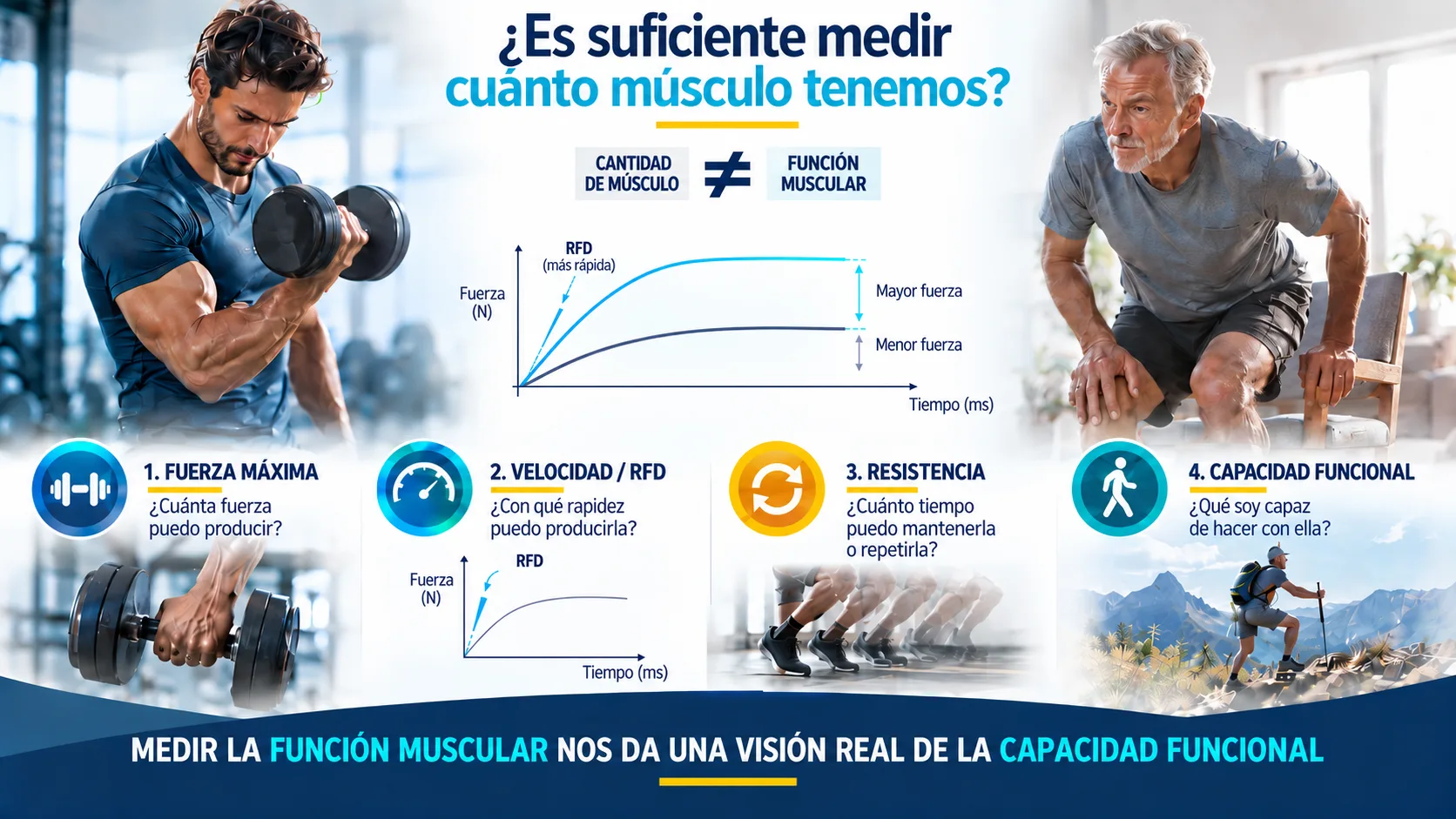
Sarcopenia is a progressive muscle disorder that increases the risk of falls, fractures, disability and mortality. The revised European consensus (EWGSOP2, 2019) establishes low muscle strength as the primary criterion, ahead of muscle quantity.
The recommended tools to measure it are precisely grip strength and the chair-stand test, followed by physical performance tests such as gait speed.
 Enlarge
How old are your muscles really?
Two 60-year-olds can have very different muscles. By comparing functional test results with age- and sex-specific reference values, we can estimate a “muscle age” and see whether we are ahead of or behind what is expected.
That easy-to-understand figure is a powerful tool to motivate patients and track their progress.
 Enlarge
Strength and the ability to move
Grip strength predicts longevity, and the ability to rise from a chair or walk with ease determines everyday independence. Assessing them regularly allows action before limitations appear.
 Enlarge
What science says
Traditionally, diagnosis has relied on blood tests and imaging. We now know that muscle function provides prognostic information that does not show up there. That is why objective strength assessment is being incorporated into clinical practice and preventive medicine.
 Enlarge
Free tool
Take the online sarcopenia test: SARC-F questionnaire, strength, muscle mass and gait speed with the European EWGSOP2 criteria.
Frequently asked questions
What is sarcopenia?
A progressive muscle disorder that increases the risk of falls, fractures, disability and mortality. It is not just losing muscle, but losing functional capacity.
At what age does muscle mass start to decline?
From the fourth decade of life muscle mass declines progressively, and strength declines even faster. Fast (type II) fibres are the most affected.
How is sarcopenia detected?
According to the European consensus EWGSOP2 (2019), low muscle strength is the main criterion to suspect it. The recommended tests are grip strength and the chair stand test, followed by performance tests such as gait speed.
What is muscle age?
An estimate obtained by comparing functional test results with reference values by age and sex.
References
- Cruz-Jentoft AJ et al. Sarcopenia: revised European consensus on definition and diagnosis. Age Ageing. 2019;48:16-31.
- Goodpaster BH et al. The loss of skeletal muscle strength, mass, and quality in older adults: the Health, Aging and Body Composition Study. J Gerontol A Biol Sci Med Sci. 2006;61:1059-64.
- Nilwik R et al. The decline in skeletal muscle mass with aging is mainly attributed to a reduction in type II muscle fiber size. Exp Gerontol. 2013;48:492-8.
For general information only. It does not replace assessment by a healthcare professional.