

Physiology4 min readBy Juan Manuel Rovira de Miguel
Not all muscle fibres are the same
Slow, fast and very fast fibres: each type has a role. Understanding them explains why speed and power matter so much as we age.
Three fibre types
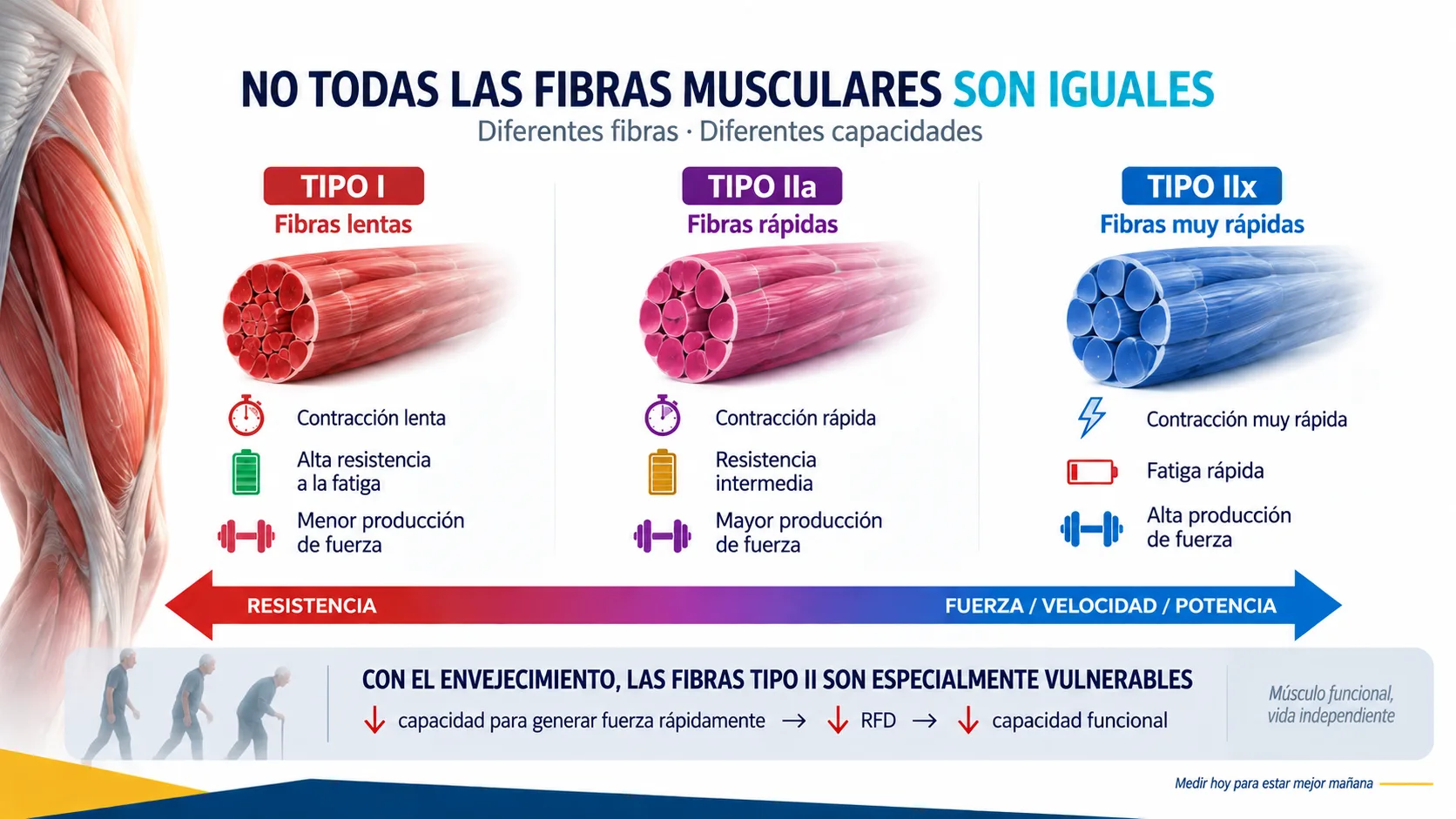
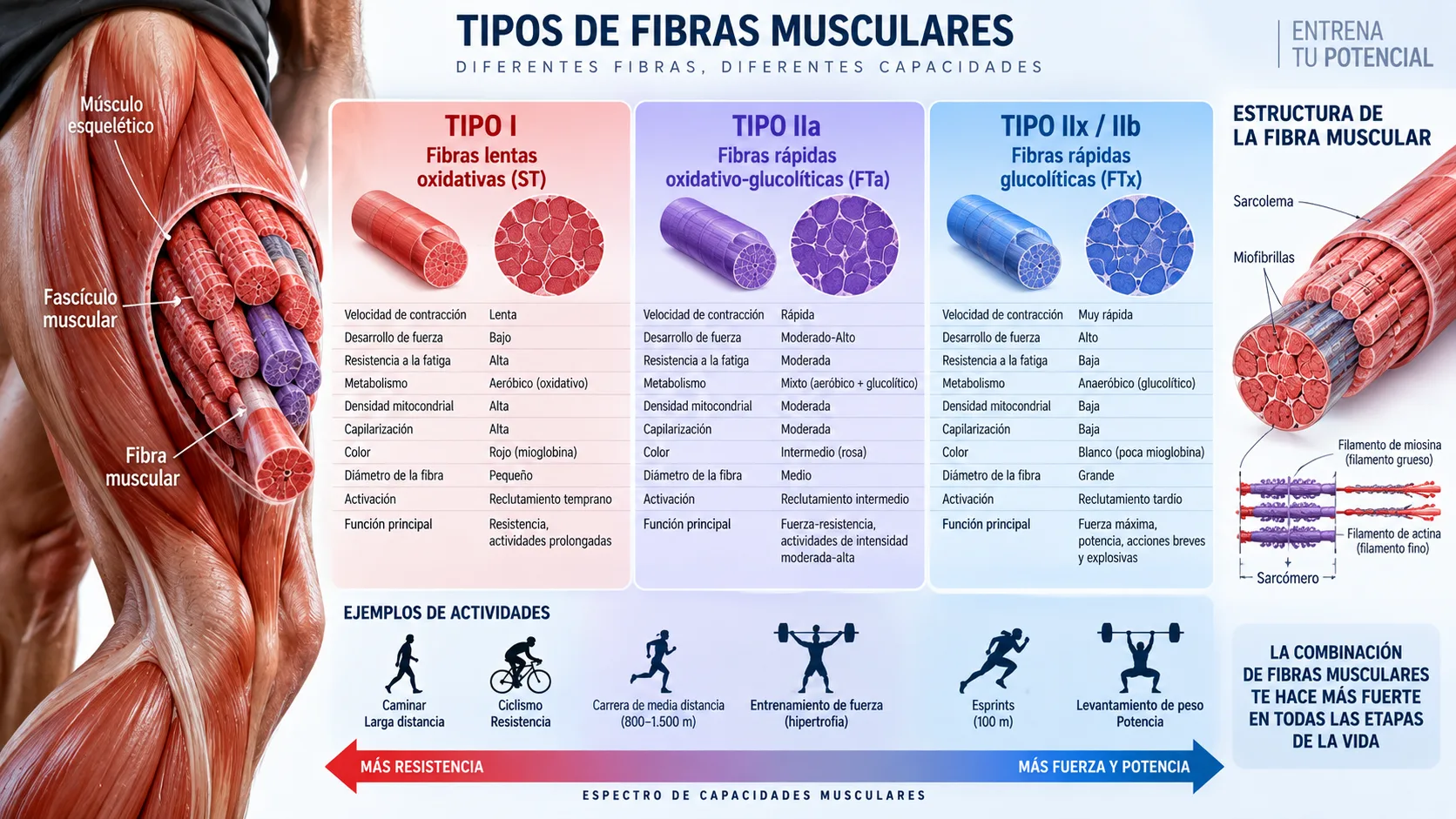
Each muscle combines different fibre types. Type I (slow, oxidative) fibres are highly fatigue-resistant and sustain posture and prolonged efforts. Type IIa (fast) fibres combine force with intermediate endurance. Type IIx (very fast) fibres produce maximum force and power but tire quickly.
- Type I: slow contraction, high endurance, lower force output.
- Type IIa: fast contraction, intermediate endurance, higher force.
- Type IIx: very fast contraction, quick fatigue, maximum force and power.
 Enlarge
Why they matter as we age
With ageing, type II fibres are especially vulnerable: they shrink in size and number. That reduces the ability to produce force rapidly (RFD) — exactly what we need to prevent a fall or stand up briskly.
The good news is that strength training — especially when performed with the intention of moving fast — stimulates these fibres at any age.
 Enlarge
How it shows up in a measurement
A high RFD in the grip or leg-extension test indicates a greater contribution from fast fibres. That is why Wellness Bench and HandGrip record not only peak force but also how quickly it is reached.
Frequently asked questions
What types of muscle fibres are there?
Type I fibres are slow and fatigue-resistant. Type IIa fibres are fast and intermediate, with more force and moderate endurance. Type IIx fibres are the fastest and most powerful, but fatigue quickly.
What happens to fast fibres with age?
Type II fibres shrink in size and number. This reduces the ability to produce force quickly (RFD), which is needed to avoid a fall or stand up with agility.
Can fast fibres be trained?
Strength training, especially with the intention of moving fast, can stimulate fast fibres at any age.
References
- Schiaffino S, Reggiani C. Fiber types in mammalian skeletal muscles. Physiol Rev. 2011;91:1447-531.
- Nilwik R et al. The decline in skeletal muscle mass with aging is mainly attributed to a reduction in type II muscle fiber size. Exp Gerontol. 2013;48:492-8.
For general information only. It does not replace assessment by a healthcare professional.